2026-10-13 ·
Why Does Your Dryer Take Too Long to Dry Clothes?
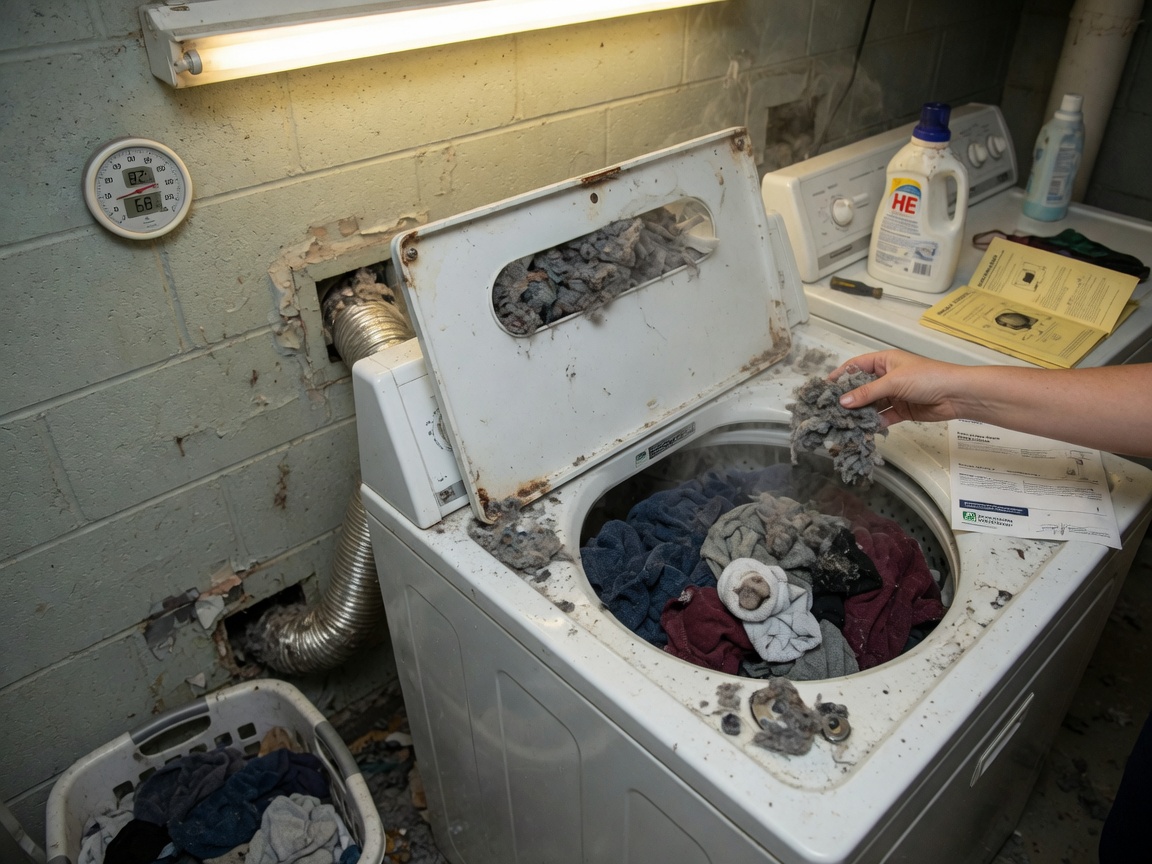
In Westchester homes a dryer that takes longer than 45-60 minutes to finish a normal load almost always points to restricted airflow caused by lint buildup inside the vent duct or at the exterior hood.
Lint Accumulation in Local Vents
Westchester sits in Cook County where many single-family homes built between the 1950s and 1980s around Westchester Town Center and near the Westchester Public Library have long horizontal vent runs that trap lint quickly. The humid continental climate brings heavy summer humidity that leaves clothes damper when they enter the dryer, so more moisture must be pushed through the same pipe. In winter the cold air outside creates condensation inside metal ducts that mixes with lint and hardens into blockages. Residents in nearby Hillside and Broadview report the same pattern because their homes share similar construction and vent routing. A full lint screen does not catch everything; fine particles travel into the duct and collect at elbows and the exterior flap. Over one or two seasons this layer thickens enough to cut airflow by half, forcing the dryer to run extra cycles. Homeowners who clean only the lint trap still see longer dry times because the deeper restriction stays untouched.
How Four-Season Weather Affects Drying Times
Spring and fall bring rapid temperature swings that cause vent pipes to expand and contract, loosening joints and allowing more lint to escape into wall cavities. Summer humidity keeps laundry wetter longer, while winter cold makes the dryer work harder to heat incoming air. In Bellwood and Broadview neighborhoods, older basements with shorter or poorly sloped vents trap moisture that freezes and thaws, creating ice dams inside the pipe during January thaws. These seasonal changes turn minor lint layers into major obstructions faster than in milder climates. When the exterior hood flap sticks from accumulated debris, back-pressure builds and the dryer motor runs longer to push the same volume of air. Checking the flap after each season prevents the gradual slowdown that many Westchester households notice only when utility bills rise.
Practical Steps to Restore Normal Drying
Start by unplugging the dryer and pulling it away from the wall to inspect the flexible transition hose for kinks or crushed sections common in tight laundry rooms near Community Park homes. Disconnect the hose and use a vent brush or shop vacuum to clear the first three to four feet of rigid duct. Next, go outside and remove the hood cover to clear any bird nests or packed lint at the exit point. Run the dryer on air-only for ten minutes while holding a tissue at the exterior opening; strong steady flow means the line is open. If airflow remains weak, the blockage sits deeper and requires a professional rotary brush or camera inspection. Homeowners who repeat this check twice a year keep drying times under 50 minutes for most loads.
When to Schedule Professional Service
If basic cleaning does not return drying times to normal, the issue may involve a failing heating element, worn blower wheel, or collapsed section of hidden ductwork behind finished walls. Dryer vent cleaning restores full airflow without replacing parts, while dryer repair addresses mechanical failures that mimic vent problems. Regular attention also appears in how regular appliance maintenance can save you money because clean vents reduce energy use and extend dryer life. Residents in Hillside can request service that covers the same Cook County conditions found in Westchester. Call 24/7 from the address at 2138 S Mannheim Rd to schedule an inspection before the next seasonal change worsens the restriction.